
- 作者:北邓杜海
- 来源:魔法禁书目录
- 发布时间:2026-08-26
快乐男声
Diljit Dosanjh Highlights Narrative Control Discussion As Punjab 95 Remains Stalled By CBFC_我的网站

一 |
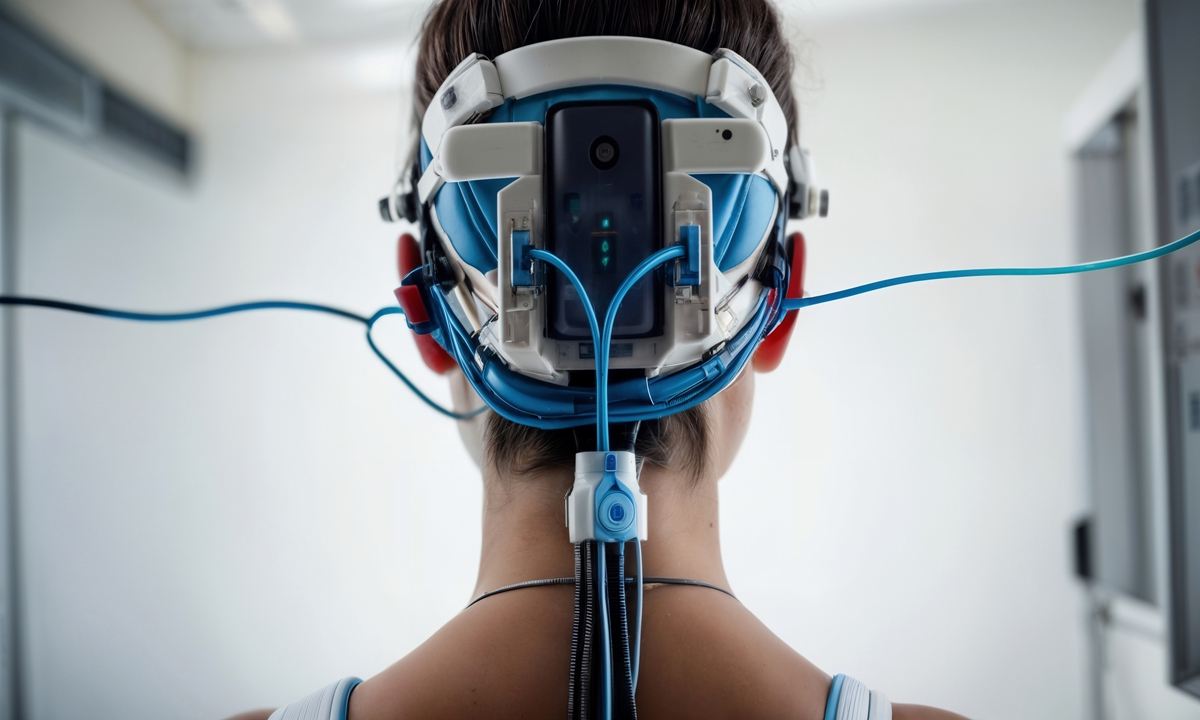
Chinese researchers have developed a multifunctional electrode coating that addresses key challenges in long-term brain-computer interface (BCI) implantation, including signal loss and tissue adhesion, bringing BCI one step closer to clinical application, the Global Times learned from the research team behind the findings on Sunday.
As an emerging field combining neuroscience and artificial intelligence (AI), BCI faces a major challenge of ensuring long-term compatibility between electrodes and brain tissue. Previous clinical trials showed that immune responses could cause implanted electrodes to retract after just three months, severely reducing signal quality and the number of available channels.
This problem stems from chronic inflammation triggered by implants, which creates insulating scar tissue around electrodes and separates them from neurons. Irreversible adhesion between electrodes and brain tissue after long-term implantation also makes device removal risky, potentially causing brain injury during follow-up surgeries.
Experiments showed that flexible neural electrodes coated with this material could operate stably in the brain for more than 300 days and could be safely removed without causing damage. This means the universal coating technology can make electrodes not only operate stably over the long term but can also be safely removed and replaced after aging, paving the way for long-term BCI applications.
Developed by the research team led by Zhang Wei at the Technical Institute of Physics and Chemistry, Chinese Academy of Sciences, associated with Beijing Tiantan Hospital, Shanghai Institute of Microsystem and Information Technology and NeuroXess, a high-tech life science company specializing in BCI technologies, the cationic alternating peptide electrode coating preserves electrode flexibility and conductivity, while offering antibacterial, anti-protein adsorption and immune-rejection-inhibiting functions.
A 300-day animal study showed the coating's effectiveness. Bare electrodes experienced a sharp loss of recording capability after 90 days of implantation and could barely detect neuronal signals after 300 days. In contrast, coated electrodes maintained stable recording channels and consistently captured neural signals above 155 microvolts.
In terms of neural modulation, after 300 days of implantation, conventional electrodes required a current of 100 microamps to induce weak limb responses, while coated electrodes triggered clear movements with only 2 microamps, improving modulation efficiency by 50 times.
Notably, the removal tests highlighted a key advantage of the coating that electrodes no longer form irreversible bonds with brain tissue. In the experiments, the coated electrodes were removed intact, with minimal damage to the surrounding brain tissue, Zhang told the Global Times on Sunday.
。 The debate around cinematic narratives and representation has taken a personal turn as Diljit Dosanjh recently shared a hard-hitting post on his Instagram stories. He shared a report highlighting the stark contrast between the reception of mainstream patriotic films and the ongoing struggle of his long-delayed biopic, Punjab 95. The post shared by Diljit draws a direct comparison between how certain roles are celebrated versus others that face hurdles. It points out that while Diljit receives widespread acclaim for his participation in high-profile patriotic projects like Border 2, his work on the biopic of human rights defender Jaswant Singh Khalra remains in a state of limbo. The shared content notes that Punjab 95 has been stuck with the CBFC (Central Board of Film Certification) for three years. This delay stands in contrast to the rapid success of other contemporary releases, such as Dhurandhar: The Revenge, which the post mentions is being celebrated even as Punjab 95 continues its battle with the censor board. Punjab 95, directed by Honey Trehan, delves into the life of Jaswant Singh Khalra and his investigations into sensitive historical events in Punjab. The film has reportedly faced demands for extensive cuts and changes, preventing its domestic release for almost 36 months. The post suggests a perceived disparity in how the film industry and regulatory bodies treat different types of stories. While films that align with established nationalistic themes often find a smooth path to the audience, biographical stories that explore complex human rights issues or historical grievances seem to face a much more rigorous and prolonged screening process. By sharing this specific critique, Diljit Dosanjh aligned himself with the conversation regarding creative freedom and the importance of telling diverse stories. For now, the contrast between the celebrated mainstream cinema and the stalled biopic of Jaswant Singh Khalra continues to spark a debate about the future of storytelling in Indian cinema. Also Read: Border 2 OTT Release: When & Where to Watch Sunny Deol’s Film?。
Current article:http://9talg.nenyaogecebenliexi.shop/fem/20260826/40467.html
Published on:00:38:37
- 本文标签:
- 我们的少年时代